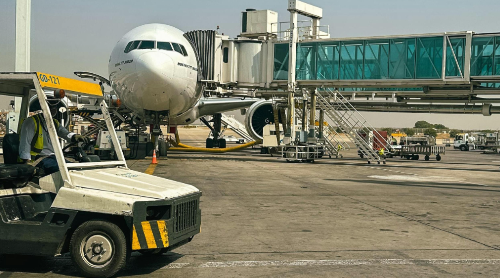
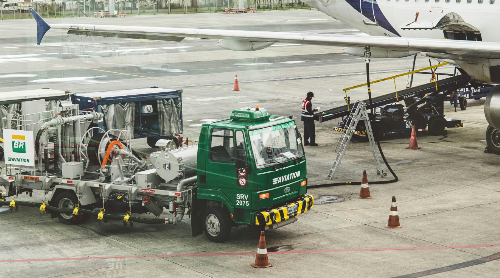
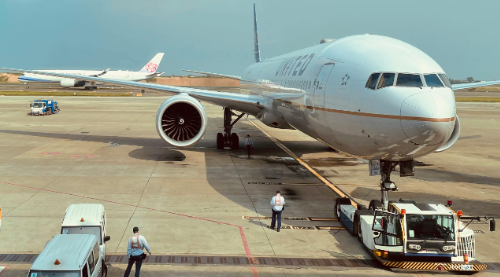
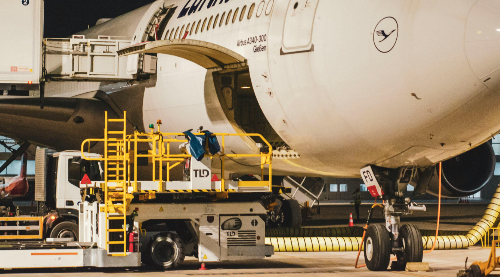
In domestic air cargo, aircraft are not neutral carriers. They actively shape what can move, when it can move, and how reliably it will arrive. Two shipments on the same route can experience completely different outcomes simply because they are assigned to different aircraft types.
Understanding domestic air cargo without understanding aircraft is incomplete. The aircraft is not just the final leg of transport. It is the governing constraint.
Passenger Aircraft Belly Space and Its Hidden Tradeoffs
Most domestic air cargo in Australia moves inside the belly holds of passenger aircraft. This model appears efficient, but it introduces a layered set of dependencies that are often invisible to shippers.
Belly space is shared with passenger luggage, crew equipment, and fuel driven weight calculations. Cargo acceptance is therefore conditional, not guaranteed. Changes in passenger load, weather, or fuel requirements can reduce available cargo capacity minutes before departure.
Because these aircraft are designed primarily for people, not freight, cargo must conform to strict dimensional and weight limits. Odd sized, dense, or fragile shipments face higher risk of deferral, even on otherwise routine routes.
Reliability here is not about speed. It is about predictability under fluctuating variables.
Dedicated Freighter Aircraft and Payload Certainty
Freighter aircraft exist to move cargo, not accommodate it. Their structural design allows for higher payload density, more flexible loading configurations, and fewer last minute tradeoffs.
However, freighters operate on narrower schedules and limited corridors. They prioritise volume aggregation rather than frequency. This makes them ideal for consolidated freight, critical industrial supply chains, and sectors where dimensional tolerance matters more than departure choice.
Freighters reduce capacity uncertainty but increase dependency on schedule alignment. Missing a freighter window often means waiting significantly longer than missing a passenger flight.
Regional Turboprops and the Reality of Access
Turboprop aircraft underpin regional and remote domestic air cargo across Australia. They connect secondary airports, mining regions, agricultural hubs, and remote communities where jet aircraft cannot operate efficiently.
These aircraft impose the strictest constraints. Payload limits are sensitive to runway length, temperature, altitude, and weather. A shipment accepted in cooler conditions may be rejected under heat load calculations on the same route days later.
Here, cargo planning becomes an exercise in risk reduction rather than speed optimisation.
Aircraft Assignment Is Dynamic, Not Fixed
One of the most misunderstood aspects of domestic air cargo is the assumption that aircraft assignment is stable. In reality, aircraft swaps occur frequently due to maintenance, weather, crew rotation, or network optimisation.
A shipment booked under one aircraft profile may end up loaded onto another with different capabilities. This is where dimensional tolerance, packaging decisions, and buffer planning become decisive.
Experienced operators plan for aircraft variability, not aircraft certainty.
Why Aircraft Knowledge Changes Decision Quality
Shippers who understand aircraft types make better decisions before urgency appears. They know when belly space is sufficient, when freighters are necessary, and when turboprop limitations require adjusted expectations.
This understanding transforms domestic air cargo from a reactive service into a managed system.
In Australia’s geographically amplified network, aircraft choice does not just influence cost or speed. It determines whether cargo moves at all.